The Sunburn Paradox: Why Staying Out of the Sun Can Make You More Vulnerable to It
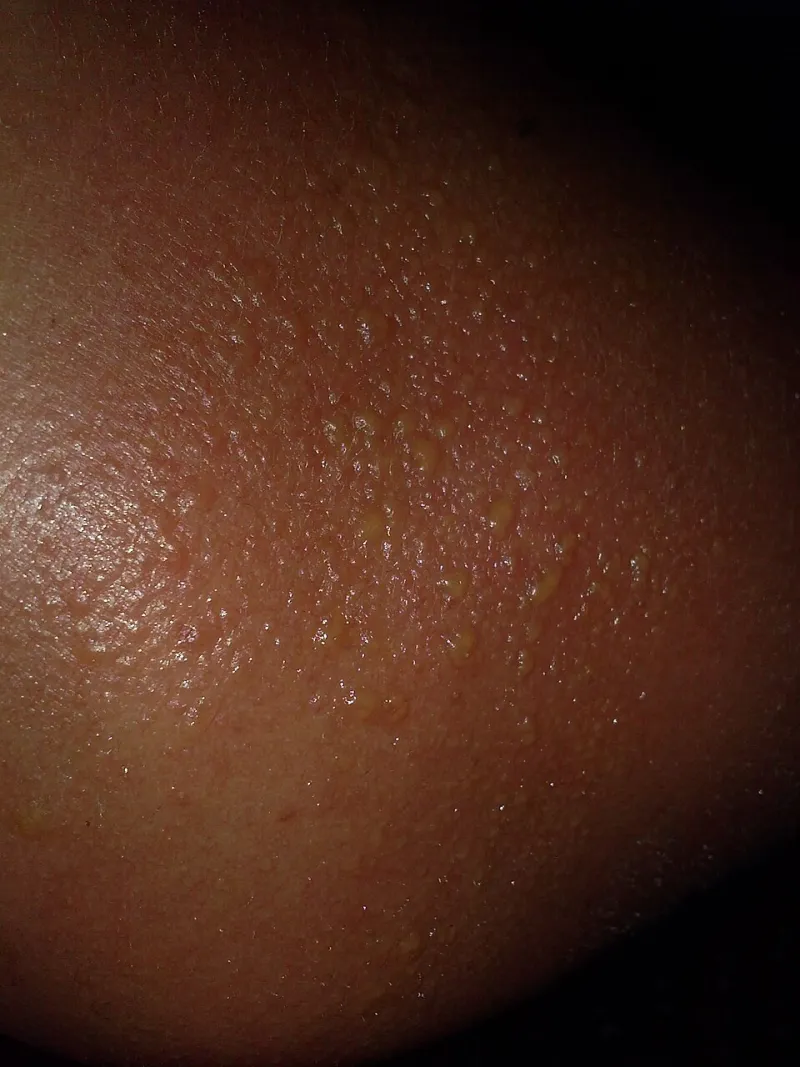
Photo: Dfvchrome, CC0, via Wikimedia Commons
There is a reasonable assumption embedded in most sun safety messaging: the less time you spend in the sun, the better protected your skin will be. For people who work indoors, live in northern climates, or have simply made a habit of sun avoidance, this logic feels self-evident. Yet dermatological science tells a more complicated story. Individuals who consistently avoid UV exposure often find themselves burning faster, burning deeper, and recovering more slowly when they do venture outdoors—sometimes after just an hour on a summer afternoon.
This is not a quirk of bad luck. It is a predictable biological outcome, and understanding it may be one of the more important—and underappreciated—concepts in practical sun safety.
How the Skin Builds Its Natural Defense
The human skin is not a passive barrier. It responds to its environment, and UV radiation is one of the most powerful environmental signals it receives. When skin is exposed to ultraviolet light on a repeated, moderate basis, it initiates a cascade of protective adaptations.
The most well-known of these is melanogenesis—the production of melanin by specialized cells called melanocytes. Melanin is the pigment responsible for tanning, but its biological purpose is far more functional than cosmetic. It acts as a natural broadband UV absorber, scattering and neutralizing radiation before it can damage the DNA inside skin cells. Importantly, melanin production is not a one-time event. It is an ongoing, adaptive process that ramps up in response to consistent UV exposure and diminishes when that exposure is withdrawn.
Beyond melanin, the skin also responds to UV exposure by thickening its outermost layer, the stratum corneum. This structural adaptation provides an additional physical buffer against solar radiation. Skin that has not been exposed to UV for extended periods tends to remain thinner and more permeable—less equipped to absorb the shock of a sudden intense dose.
For someone who spends most of their time indoors, both of these mechanisms operate at a low baseline. The skin is, in a sense, unprepared.
The Role of Intermittent, High-Intensity Exposure
Sun avoidance does not eliminate UV exposure—it tends to compress it. Someone who avoids the sun for weeks or months and then spends a full afternoon at a Memorial Day cookout, a beach vacation, or a weekend hiking trip is subjecting largely unacclimated skin to a concentrated UV dose. This pattern—intermittent but intense exposure—is now recognized in the scientific literature as a particularly significant risk factor for both acute sunburn and long-term skin damage.
Research has repeatedly identified this intermittent exposure pattern as more damaging, in certain respects, than chronic low-level exposure. The skin has no opportunity to build adaptive defenses, and the sudden influx of UV radiation overwhelms the available protective mechanisms. The result is not just a more severe sunburn; the cellular damage is more extensive, and the risk of DNA mutations that can contribute to melanoma is meaningfully elevated.
This is part of why melanoma rates are not exclusively concentrated among outdoor workers who receive daily sun exposure. A substantial proportion of cases occur in people with lighter occupational UV exposure who experience periodic intense episodes—the classic summer vacation burn being one of the most studied examples.
Why Sun-Avoidant Skin Burns Faster
The practical consequence of this biology is measurable. Skin that has not been conditioned by gradual UV exposure has a lower minimal erythemal dose, or MED—the threshold of UV radiation at which redness and burning begin. In highly sun-avoidant individuals, this threshold can be remarkably low, meaning that even a relatively brief outdoor exposure during peak UV hours can cross into damaging territory before the person is aware of any discomfort.
Sunburn, it is worth remembering, does not manifest immediately. The inflammatory response that produces redness and pain typically peaks 12 to 24 hours after exposure. By the time a person realizes they have burned, the cellular damage has already occurred. For someone whose skin is not adapted to UV exposure, this delayed feedback loop makes it especially easy to inadvertently exceed a safe dose.
Transitioning Back to Outdoor Life Safely
None of this is an argument against sun protection or an endorsement of deliberate tanning. Rather, it is a call for strategic awareness—particularly for individuals who are re-entering outdoor activities after a period of limited sun exposure.
Several practical principles can significantly reduce risk during this transition:
Start with shorter, lower-intensity exposures. If you have spent the winter or a prolonged stretch largely indoors, resist the temptation to dive into a full day outdoors immediately. Begin with brief outdoor intervals during morning or late afternoon hours, when the UV index is lower, and gradually extend your time as your skin acclimates.
Use sunscreen consistently, not just when you expect to burn. Broad-spectrum SPF 30 or higher remains essential regardless of your adaptation level. However, sunscreen should be understood as a complement to gradual acclimatization, not a substitute for it. An SPF 50 product applied to completely unacclimated skin still permits some UV transmission, and a single day of heavy reliance on sunscreen without any baseline adaptation carries real risk.
Pay attention to the UV Index before going out. The UV Index provides a real-time measure of solar intensity at your location. A UV Index above 6 warrants significant caution for anyone with limited recent sun exposure. Free UV Index data is available through the National Weather Service and most weather applications.
Clothing provides consistent, reliable protection. Unlike sunscreen, fabric does not degrade, sweat off, or require reapplication. Covering exposed skin—particularly the shoulders, chest, and upper back, which are frequently underprotected—is especially important during the early weeks of transitioning to outdoor activity.
Recognize that a base tan is not a safe goal. While gradual melanin adaptation does confer some modest protection, the process of achieving even a light tan involves measurable UV-induced DNA damage. The objective is not to acquire a tan; it is to allow the skin's structural defenses to develop incrementally while minimizing cumulative damage.
Rethinking the All-or-Nothing Approach
The sunburn paradox is, at its core, a reminder that the relationship between UV exposure and skin health is not linear. Complete avoidance and uncontrolled exposure both carry costs. The skin is a dynamic organ that responds to its environment, and a thoughtful, graduated approach to UV exposure—combined with consistent protective measures—reflects the actual complexity of that biology.
For health-conscious individuals who have prioritized sun avoidance, the goal is not to abandon that caution but to refine it. Awareness of your skin's current adaptation state, attention to UV conditions, and a deliberate reintroduction to outdoor activity can substantially reduce the risk that comes with the all-too-common pattern of prolonged avoidance followed by sudden intense exposure.
The science here is not paradoxical once you understand it. The skin, like most biological systems, functions best when it is allowed to adapt gradually rather than shocked into response.