Reflected UV: The Hidden Hazard That Follows You to the Beach, Slopes, and Shoreline
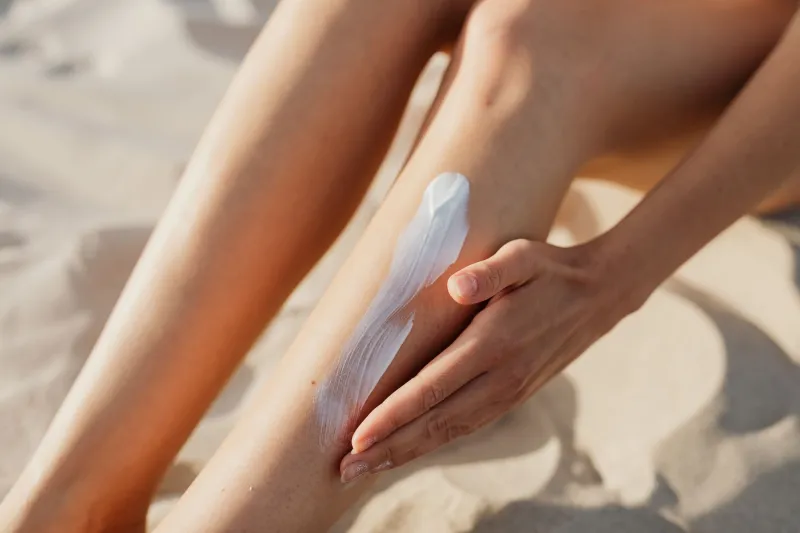
Most Americans apply sunscreen before heading to the beach or hitting the ski slopes, and most feel reasonably confident they have done what is necessary. The label has been read, the SPF number has been evaluated, and the lotion has been applied. What that routine does not account for, however, is a significant and frequently underestimated source of ultraviolet radiation: the ground beneath your feet.
Reflective surfaces — snow, sand, water, concrete, even grass — do not simply sit passively in your environment. They redirect ultraviolet radiation, sending it back upward toward exposed skin at angles that bypass the instinctive protections most people rely on. A wide-brimmed hat, for instance, offers meaningful protection from overhead sun. It offers almost none from UV radiation bouncing upward from a white sand beach. Understanding this phenomenon is not a minor footnote in sun safety education. For the millions of Americans who vacation at coastal destinations, ski in mountain environments, or spend extended time near open water, it may be one of the most consequential gaps in their protective strategy.
How Reflection Coefficients Work — and Why They Vary So Dramatically
The scientific term for the proportion of radiation that a surface reflects is its albedo, a measure used across physics, climatology, and dermatological research. Different surfaces reflect ultraviolet radiation at dramatically different rates, and those rates carry real consequences for cumulative UV exposure.
Fresh snow ranks among the most reflective natural surfaces a person is likely to encounter. Studies have measured its UV reflectance at up to 80 percent under optimal conditions — meaning that in a snowy environment, a person can be exposed to nearly double the UV radiation they would receive from direct sunlight alone. This is why altitude compounds the problem so severely. UV intensity already increases by roughly 10 to 12 percent for every 1,000 feet of elevation gained, and when that intensified radiation then bounces off a high-reflectance snowpack, the cumulative exposure can reach levels that would be remarkable even on a clear summer day at sea level.
Beach sand presents a more moderate but still significant reflection coefficient, typically estimated between 15 and 25 percent depending on its composition, moisture content, and color. Lighter, finer sand reflects more UV than darker, coarser varieties. The practical implication is that sitting under a beach umbrella — a strategy many Americans consider adequate protection — does not fully eliminate UV exposure. Radiation scattered from the surrounding sand can reach skin that is entirely in shade.
Water, including the ocean, lakes, and pools, reflects a lower proportion of UV radiation than snow or dry sand — roughly 5 to 10 percent under calm conditions. That figure, however, can rise meaningfully when water is choppy and sunlight strikes it at a low angle, and it does not account for the fact that water also transmits UV radiation. Swimmers and snorkelers frequently underestimate the exposure occurring beneath the surface, where UV penetration can remain significant in the first meter of depth.
The Geometry of Reflected Radiation
One reason reflected UV is so easy to overlook is that human intuition about sun exposure is largely shaped by the experience of direct overhead radiation. We look up to gauge how bright the sun is. We position umbrellas and seek shade based on where the sun sits in the sky. We apply sunscreen most carefully to the tops of our heads, our shoulders, and the back of our necks.
Reflected radiation disrupts that spatial logic. It arrives from below and from the sides, reaching the underside of the chin, the lower eyelids, the inner arms, and the nostrils — areas that are rarely the focus of careful sunscreen application and that standard broad-spectrum SPF testing is not specifically designed to evaluate. The SPF rating on a sunscreen bottle is determined under controlled laboratory conditions that simulate direct UV exposure. The testing protocol does not replicate the multidirectional radiation environment created by a highly reflective surface.
This is not a flaw in sunscreen formulation. It is a limitation of assuming that any single product, applied in a standard manner, will fully address an environment fundamentally different from the one the product was tested against.
Winter Sun Exposure: The Underestimated Season
Skin cancer awareness campaigns in the United States are heavily weighted toward summer. Images of beach days, outdoor concerts, and afternoon hikes dominate the public conversation about UV risk. This seasonal framing has a measurable cost: many Americans substantially reduce or eliminate sun protection habits in winter, treating cold temperatures as a reliable proxy for low UV risk.
Temperature and UV radiation are related only loosely. The UV Index — a measure of UV intensity developed by the World Health Organization and published daily by the National Weather Service — can reach moderate to high levels on clear winter days, particularly at elevation. Ski resorts in Colorado, Utah, and Vermont regularly report conditions in which the combination of altitude and snow reflectance creates UV exposure environments that rival summer beach days in terms of cumulative dose.
Skiers and snowboarders face an additional complication: activity. Extended time outdoors, physical exertion that leads to sweating, and the mechanical action of goggles, helmets, and scarves all affect sunscreen adherence and coverage. The face — particularly the nose, cheeks, and forehead — receives direct and reflected UV simultaneously, explaining the characteristic pattern of sunburn that experienced skiers recognize and casual visitors frequently do not anticipate.
Practical Strategies for High-Reflectance Environments
Protecting against reflected UV requires a broader approach than simply increasing SPF. Several strategies, used in combination, address the multidirectional nature of the exposure more effectively.
Reapplication frequency matters more in these settings. In high-reflectance environments, the case for reapplying sunscreen every 90 minutes rather than every two hours is stronger than in typical outdoor settings. Sweat, water contact, and the extended duration of activities like a full ski day or a beach afternoon create conditions where initial application degrades faster than the label's standard guidance assumes.
Coverage geometry must change. Applying sunscreen to the underside of the chin, the lower eyelids, the inner forearms, and the area beneath the nose is not optional in high-reflectance environments. These surfaces receive meaningful UV doses from below and are consistently undertreated.
Eyewear is protective equipment, not an accessory. The eyes and the delicate skin surrounding them are particularly vulnerable to reflected UV. Wraparound sunglasses with UV400 certification, or ski goggles with UV-protective lenses, are the appropriate standard in snow and beach environments. Standard fashion sunglasses with inadequate UV filtration can create a false sense of security.
Shade is less protective than it appears. In environments with high-reflectance surfaces, shade reduces direct UV exposure but does not eliminate reflected UV. A beach umbrella is meaningfully better than nothing, but it should be understood as one layer of a broader protective strategy rather than a complete solution.
Clothing choices should account for angle. UPF-rated clothing protects the areas it covers from both direct and reflected radiation. In snow environments especially, coverage of the lower face, neck, and wrists — areas often left exposed — provides protection that sunscreen alone may not sustain over a full day of activity.
Rethinking the Environments You Think You Understand
The beach and the ski slope feel familiar to most Americans. That familiarity can work against careful risk assessment. The environments that generate the most significant reflected UV exposure are often the ones that feel most like leisure — settings where the instinct is to relax rather than to maintain vigilance.
UV radiation does not respond to the human calendar or to the logic of seasons. It follows physics. Surfaces that reflect efficiently will redirect radiation regardless of how warm or cold the air feels, how overcast the sky appears, or how routine the outing seems. Building protective habits that account for this — particularly in the reflective environments that define so much of American outdoor recreation — is among the more consequential adjustments a health-conscious person can make to their overall sun safety practice.