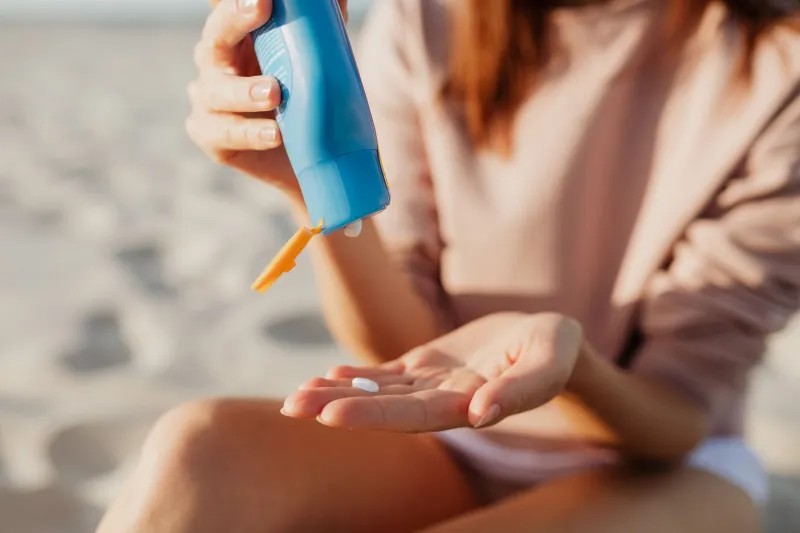
One Product, One Strategy, One Serious Mistake: Why Sunscreen Alone Leaves Children Underprotected

The Confidence Gap in Family Sun Protection
There is a particular reassurance that comes with applying sunscreen to a child before sending them outdoors. The ritual feels thorough. It feels responsible. For millions of American parents, it also feels finished.
That sense of completion is precisely where the problem begins.
Sunscreen is a clinically validated tool with genuine protective value. That much is not in dispute. What the research does challenge, however, is the widespread assumption that applying it once — or even correctly — constitutes a complete sun protection strategy. When parents treat sunscreen as a singular solution rather than one layer within a broader system, the gaps that emerge are not trivial. They accumulate silently across years of childhood, compounding into a cumulative UV burden that carries lifelong implications.
Understanding why this happens — and what dermatologists actually recommend in its place — requires looking honestly at both the science of sunscreen and the psychology of how families use it.
What Sunscreen Actually Does (And Doesn't Do)
Sunscreen works by either absorbing or reflecting ultraviolet radiation before it penetrates the skin. When applied correctly, in adequate quantity, and reapplied on schedule, it meaningfully reduces UV exposure. The operative phrase is when applied correctly.
Studies examining real-world sunscreen use consistently reveal a significant divergence from clinical application standards. The FDA testing protocol that generates SPF values uses 2 milligrams of product per square centimeter of skin — a quantity most people apply at roughly 25 to 50 percent of that density. At half the recommended application thickness, an SPF 50 product may deliver protection closer to SPF 7 or 8 in practice. This is not a flaw in the product; it is a flaw in how the product is used.
Beyond underapplication, the reapplication requirement presents its own compliance challenge. Sunscreen requires reapplication every two hours, and immediately following swimming or heavy perspiration. In practice, particularly with active children at the beach, a park, or a summer camp, this schedule is rarely maintained. A single morning application, however generous, provides diminishing protection as the day progresses.
None of this means sunscreen should be abandoned. It means it should be understood for what it is: a chemical or mineral barrier with real limitations, designed to function within a system — not to replace one.
The "Set It and Forget It" Problem
Behavioral health researchers have documented what might be called a licensing effect in sun protection: when parents apply sunscreen, they frequently feel that a protective obligation has been discharged. This psychological shift can actually reduce vigilance in other protective behaviors — seeking shade, monitoring peak exposure hours, or covering children with protective clothing.
The effect is not unique to sun safety. It mirrors patterns seen in other health-adjacent contexts where the use of one protective measure creates a false sense of comprehensive coverage. In the UV context, the consequences are compounded by the fact that UV damage is invisible in the moment. A child who spends six hours outdoors under a fading layer of morning sunscreen does not immediately display evidence of cumulative exposure. The feedback loop that might otherwise prompt behavioral correction is absent.
This invisibility is part of what makes the single-strategy approach so durable. It feels like it is working — right up until, years later, it demonstrably was not.
What Dermatologists Recommend Instead
The American Academy of Dermatology does not present sunscreen as a standalone solution. Its guidance frames sun protection as a multi-component practice, and the components it emphasizes extend well beyond the contents of a bottle.
Seek shade during peak UV hours. UV radiation intensity peaks between 10 a.m. and 4 p.m., with the highest concentration typically occurring between 11 a.m. and 2 p.m. For families with young children, structuring outdoor activity around these windows — playing outside in the morning or late afternoon rather than midday — reduces UV exposure in a way no topical product can replicate.
Use UPF-rated clothing as a primary barrier. Fabric is a consistent, non-degrading physical barrier. A long-sleeved shirt with a UPF rating of 50 blocks approximately 98 percent of UV radiation reaching the covered skin. It does not need reapplication. It does not thin out when a child sweats or swims. For children who resist sunscreen application — a common and developmentally understandable behavior — UPF clothing removes much of the compliance burden while providing superior protection to exposed areas.
Prioritize hats with meaningful brim coverage. A standard baseball cap leaves the ears, neck, and lower face largely unprotected. Dermatologists recommend wide-brim hats with at least a three-inch brim for adequate facial and neck coverage. These areas represent some of the most common sites for sun-related skin damage and, eventually, skin cancer in adults.
Apply sunscreen to uncovered skin — correctly and on schedule. Within a layered framework, sunscreen plays a focused and effective role: protecting the skin that clothing and shade cannot cover. Applied to the face, hands, and any exposed areas, with proper density and timely reapplication, it performs its function well. The mistake is asking it to perform every function.
Building a System Families Can Actually Sustain
The practical challenge with multi-layered sun protection is that it sounds like more work. For parents already navigating the logistics of getting children dressed, fed, and out the door, adding behavioral layers to a morning routine requires a realistic approach to sustainability.
The most effective family sun protection strategies tend to share a few characteristics. They rely on passive protections — shade structures, UPF clothing, scheduled outdoor timing — that do not require moment-to-moment decision-making. They reserve active interventions like sunscreen for the specific task of covering exposed skin rather than treating it as a whole-body solution. And they account for the reality that children move, swim, sweat, and resist — which means any strategy dependent entirely on a single reapplication-sensitive product will fail under field conditions.
For parents of younger children especially, building sun-safe habits early matters beyond the immediate protective benefit. Children who grow up in households where layered protection is normalized — where hats are routine, shade is sought, and clothing choices reflect UV awareness — develop behavioral patterns that persist into adulthood. The dermatological case for this approach is not merely about protecting children now. It is about equipping them with a framework that serves them across a lifetime of sun exposure.
The Honest Accounting
Sunscreen is not a myth. It is not ineffective. It is a scientifically grounded tool that, used as part of a broader protective strategy, contributes meaningfully to reducing UV-related skin damage.
What is a myth — and a costly one — is the idea that applying it once in the morning constitutes comprehensive sun protection for an active child spending hours outdoors. The science of UV exposure, the behavioral reality of sunscreen use, and the clinical guidance from dermatology all point in the same direction: no single product, applied to skin that spends the day in direct sunlight, can substitute for a layered approach.
Understanding that distinction is not cause for alarm. It is cause for adjustment — and the adjustments, once made, are neither expensive nor complicated. They simply require knowing what sunscreen was designed to do, and building the rest of the system around it.