Driven to Damage: The Surprising Amount of UV Radiation You Absorb Behind the Wheel
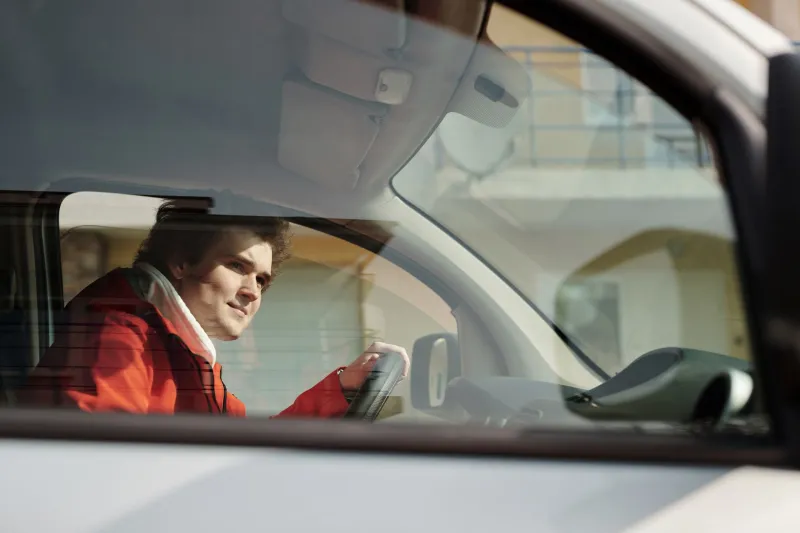
For millions of Americans, the daily commute is simply a fact of life. Whether it is twenty minutes on a suburban highway or ninety minutes navigating urban traffic, time spent in a vehicle has long been treated as time spent indoors—protected from the elements, including the sun. That assumption is understandable. You are enclosed, shaded, and separated from direct sunlight by glass. What more protection could you reasonably need?
Quite a bit more, as it turns out.
Research into UV transmission through vehicle glass reveals a more complicated picture than most drivers expect. The windshield in front of you and the side window beside you behave very differently when it comes to ultraviolet radiation—and the distinction has real consequences for skin health over time.
How Vehicle Glass Filters UV Radiation
Not all UV radiation is the same. The ultraviolet spectrum is divided into UVA (wavelengths between approximately 315 and 400 nanometers) and UVB (wavelengths between approximately 280 and 315 nanometers). These two types of radiation interact with glass very differently.
Modern automotive windshields are constructed from laminated safety glass—two layers of tempered glass bonded together with a polyvinyl butyral (PVB) interlayer. This lamination process, developed primarily to prevent the windshield from shattering into sharp fragments during a collision, has an important secondary consequence: it substantially blocks UVB radiation and filters a significant portion of UVA radiation as well. Studies have found that laminated windshields typically block upwards of 96 percent of UVA radiation, offering a meaningful degree of protection for drivers facing directly forward.
Side windows and rear windows, however, are an entirely different matter. These are almost universally made from tempered glass alone—a single layer of heat-treated glass that lacks the PVB interlayer found in windshields. Tempered glass blocks virtually all UVB radiation, but its UVA filtration is far less effective. Depending on the specific glass composition and vehicle, side windows may block as little as 40 to 70 percent of UVA radiation—leaving a substantial fraction to pass through unimpeded.
This distinction matters enormously because UVA radiation is the primary driver of photoaging. It penetrates more deeply into the dermis than UVB, degrading collagen and elastin, contributing to the formation of wrinkles, and playing a well-documented role in melanoma development. The fact that you cannot feel UVA radiation—it produces no immediate warmth or visible burn at low doses—makes it particularly easy to underestimate.
The Left-Side Problem: Asymmetric Exposure in American Drivers
In the United States, drivers sit on the left side of the vehicle. The left arm, left hand, and left side of the face are therefore positioned closest to the driver's side window—the same window that, in most vehicles, offers limited UVA protection. The clinical literature has taken note of this pattern.
Dermatologists have documented a well-established asymmetry in photoaging and skin cancer incidence among American drivers, with the left side of the face, left forearm, and left hand showing disproportionately higher rates of UV-related damage compared to the right. A study published in the Journal of the American Academy of Dermatology examined this phenomenon directly, finding a statistically significant left-side predominance in the distribution of skin cancers among US drivers—a pattern reversed in countries where drivers sit on the right.
This is not a theoretical concern. It is a measurable, documented consequence of routine, low-awareness UV exposure accumulated over years of driving.
Vehicle Age, Tinting, and the Variation Between Cars
The degree of UV protection offered by a vehicle's side windows is not uniform across all cars. Several variables influence how much radiation ultimately reaches the occupant.
Glass age and condition. UV-filtering compounds in automotive glass can degrade over time, particularly with prolonged sun exposure. An older vehicle may offer meaningfully less protection than a newer one, even if both were manufactured with similar specifications.
Factory tinting versus aftermarket film. Some vehicles come equipped with factory-applied tinted glass, which may offer modestly improved UV filtration compared to standard clear glass. Aftermarket window films vary considerably in quality and UV-blocking efficacy. Films explicitly rated for UV protection—rather than simply for heat reduction or aesthetics—can significantly reduce UVA transmission through side windows, though the degree of protection depends heavily on the specific product and installation quality.
Rear windows and sunroofs. Rear passengers are not immune. Rear side windows and rear windshields are subject to the same limitations as front side windows. Panoramic sunroofs, increasingly common in modern vehicles, present an additional exposure pathway unless specifically treated with UV-blocking glass or film.
Practical Strategies for Reducing In-Car UV Exposure
Recognizing the limitation of vehicle glass does not require dramatic behavioral changes. Several accessible strategies can meaningfully reduce cumulative UV exposure during driving.
Apply sunscreen before commuting. Broad-spectrum sunscreen applied to the face, neck, left arm, and hands before getting in the car addresses exposure directly. An SPF 30 or higher product applied to exposed skin is one of the most straightforward interventions available, yet surveys consistently find that most Americans do not consider sunscreen application a part of their morning driving routine.
Consider UV-protective window film. For individuals who spend significant time in their vehicles—whether through long commutes, professional driving, or frequent road travel—investing in a quality aftermarket window film rated for UVA protection is worth considering. Not all films are equivalent; look for products that specify UVA blocking percentages rather than relying solely on visible light transmission ratings or tint darkness as proxies for UV protection.
Wear UV-protective clothing. Long sleeves and lightweight UPF-rated garments offer a passive, reliable barrier for the arms and hands during extended driving. This is particularly relevant for those who drive with their arm resting near or against the window.
Use sun-protective driving gloves. Though less commonly used in the United States than in some other countries, lightweight UV-protective gloves are commercially available and can substantially reduce exposure to the hands and wrists—areas that accumulate significant UV damage over a driving lifetime.
Be aware of extended or high-elevation driving. UV intensity increases with altitude and varies by geographic region. Road trips through high-elevation areas such as the Rocky Mountain West, or extended driving during peak UV hours between 10 a.m. and 4 p.m., represent higher-exposure scenarios that warrant additional precautions.
Rethinking the Commute as a UV Event
The concept of UV exposure is most readily associated with beaches, swimming pools, and outdoor recreation. The daily commute rarely enters the conversation—which is precisely why it warrants attention. Exposure accumulated in fifteen- or thirty-minute increments, repeated five days a week, across decades of adult life, is not trivial. It is the kind of low-grade, consistent exposure that does not announce itself with a sunburn but registers nonetheless at the cellular level.
The windshield in front of you is doing a reasonable job. The window beside you is not. That asymmetry, invisible in daily life, is worth understanding—and worth addressing with the same deliberate approach applied to any other UV exposure scenario.